
Metroid Prime 4: Beyond (Switch): Terrible On Its Own Terms
The issue is not that Metroid Prime 4: Beyond isn't as good as Metroid Prime, the issue is that Metroid Prime 4: Beyond isn't good.
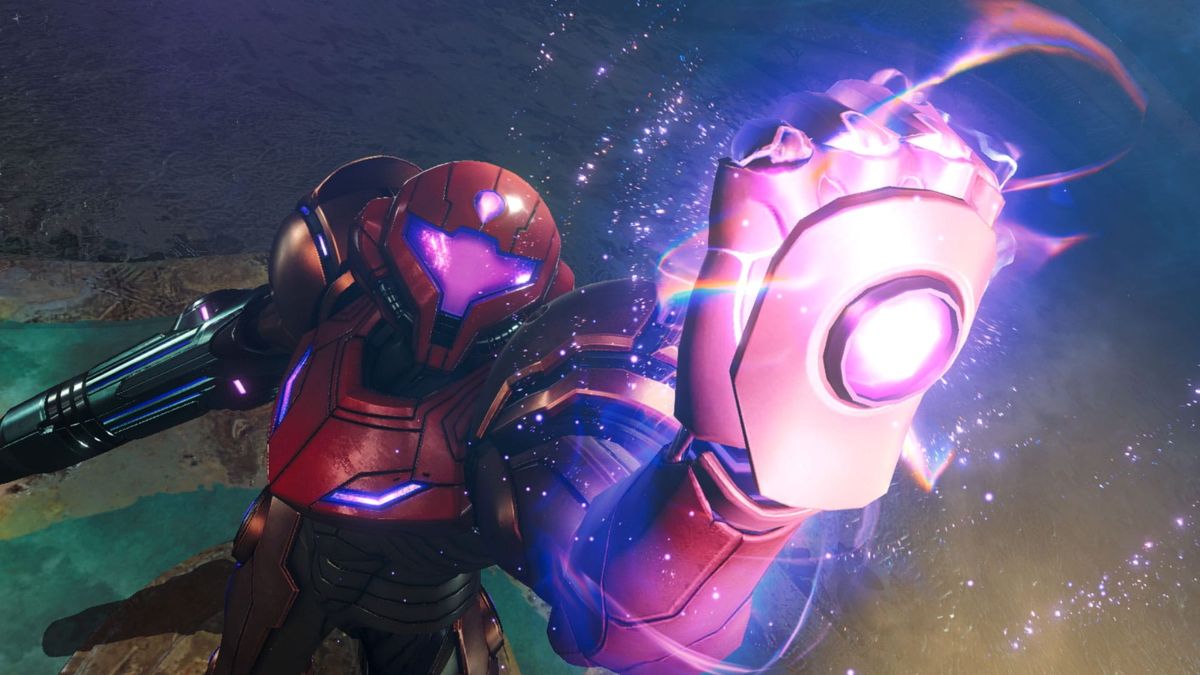
The easiest critique of Metroid Prime 4: Beyond is that it's not as good as Metroid Prime. The game comes with a lot of expectation, perhaps unfairly. It is a new game in a legendary subseries of a legendary series and it was announced in 2017. The last Metroid Prime game, (Metroid Prime 3: Corruption) came out in 2007 and, though praised for its motion controls (it was a Wii game) and cinematic feel, it was critiqued for its linear design and increased focus on action. Under this lens, Metroid Prime was already a subseries on the decline but the thing that will always be true is that it started with one of the best video games of all time. The original Metroid Prime stands next to Super Mario 64 and The Legend of Zelda: Ocarina of Time as games where Nintendo superbly transitioned their iconic 2D series not only successfully into 3D but in genre defining ways. All three are truly outstanding video games and incredibly influential. It is a rough comparison point but it is an invited one, as Metroid Prime: Remastered released in 2023.
The only previous Metroid Prime game you can play on either the Nintendo Switch 1 or 2 (the platforms 4 is on) is Metroid Prime: Remastered. The release further creates an expectation compounded by how the Trilogy Collection was available on Wii and Wii U. Metroid Prime 4: Beyond positions itself as follow-up to Metroid Prime 3 (which makes numerical sense), a game inaccessible on the platform. This means you can only play the remaster of the first game to get ready for this one and that cements quite the expectation. And while you may not expect the game to be of the same quality, it at least creates a structural expectation or one of ambition. This only makes things more difficult for Prime 4 but this is still the easy critique because of course it isn't as good as Metroid Prime. The more pertinent critique sticks deeper, the issue is not that Metroid Prime 4: Beyond isn't as good as Metroid Prime, the issue is that Metroid Prime 4: Beyond isn't good.
The first game is still a useful comparison point, though, because it is a bit of a miracle. Transitions to 3D are awkward, many games flubbed this, and the expectations of Prime were low. Another point is that this was a first person game, somewhat of a first person shooter, existing on a platform with only one analogue stick and coming out post Halo – another template setting game. Halo mapped out a control scheme, and more, for first person shooters that would be further established by Call of Duty 4: Modern Warfare, an approach that still fits in with the controllers we use today. The GameCube controller (the platform Prime was on) is a different beast and, much like how Ocarina of Time and Mario 64 were built with N64 quirks in mind, that game was made specifically for the GameCube. The lock on targeting is notable but the pace of the game, the mechanical demands of the game, are defined by the platform. It is not really a twitch game, more a game of exploration and atmosphere to make up for a lack of input precision. Metroid Prime 4: Beyond is a game for the Switch and Switch 2. However, it still is built upon a design sensibility and control sensibility born of the GameCube. Yet, Prime Remastered is spectacular on Switch but that's because the game design fundamentals are superb. Also, GameCube design works on a platform that can do more. Prime 4 is GameCube constraints stretched towards modern sensibilities and, by being so, is somehow a worse controlling game than not only the 2002 classic but even the 2023 remaster.
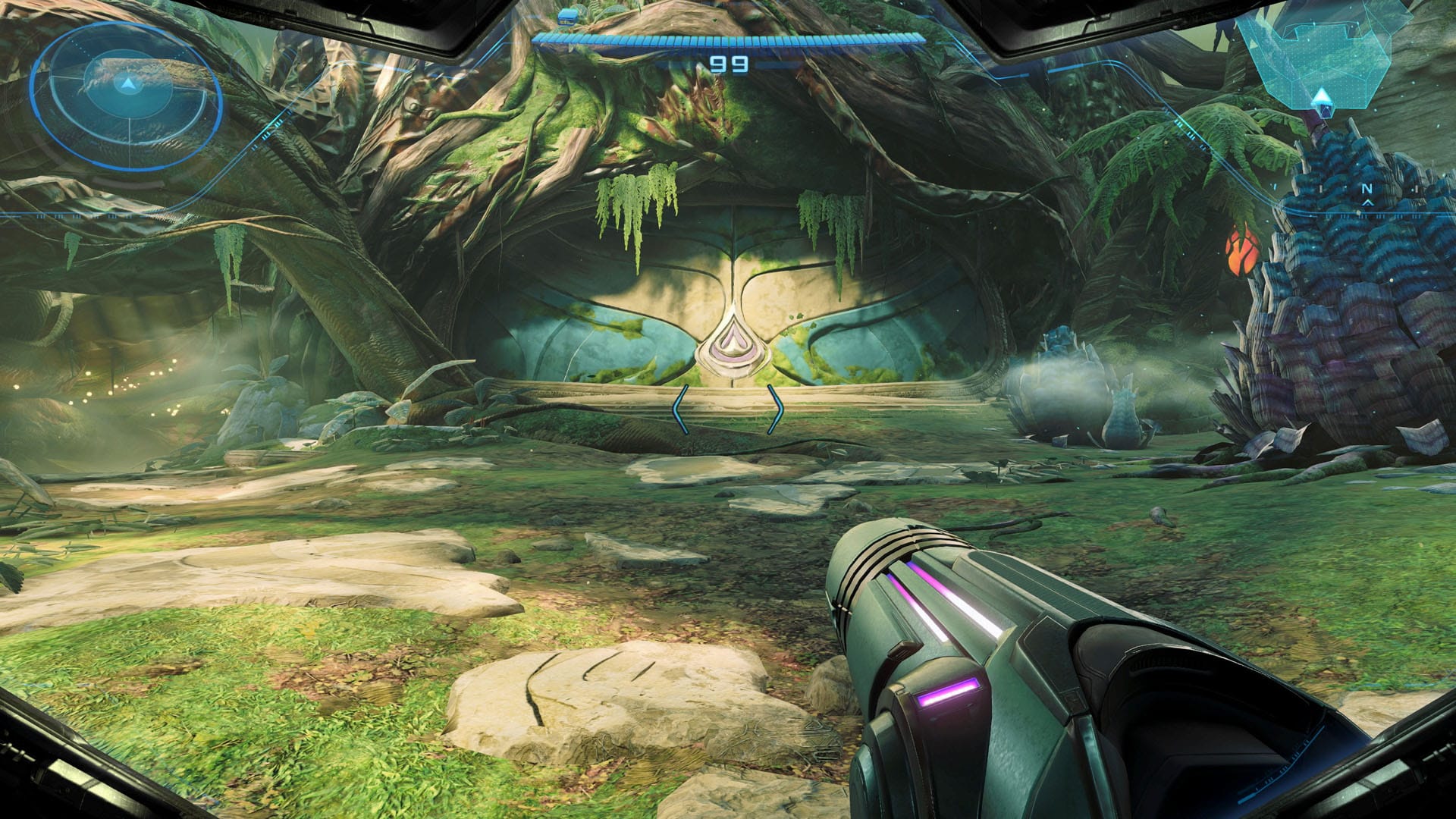
The core is the same, you lock on to enemies and you scan things. Your basic toolset is the same, and imparted over the course of the game as upgrades. This repetition in design is part of the problem, as there are so many comparison points to previous games, diminished by repetition and dulled further by this being a weaker version of familiar tropes. There are changes, though. Things are more actiony, and there is a lot more combat. You don't just lock onto enemies with a large reticle anymore. The reticle is smaller and lock on creates an aiming window that you can move said reticle around in. This sucks. To link back to Prime 1, the game's first boss has weak spot to aim at, but to aim at it you scan the enemy to shift your lock on to defaulting to that weak point. The game then puts mechanics around that boss fight, separate from aiming precision, to make it more interesting (rotating shields to shoot between). The second main boss is also more about the ancillary mechanics: shooting the boss is what you do to stun it but the fight is a puzzle where you have to focus beams on the boss in order to expose the weak point (which you then get to with your morph ball). I list these examples because both of these bosses (and the first one is an easy tutorial) are far more interesting than any of the encounters in Prime 4. In Prime 4, it is about shooting the weak point. You target the boss and then you move the reticle around in that targeting window to attack a weak point, a demand of precision that is still based in an approach to control born of the GameCube. The wider controls, and the basic feel of the game, is carried over from Prime 1 (arguably a bit snappier). These action encounters are befitting of conventional FPS controls and fighting in Prime 4 feels like fighting the controller. It is not a satisfying action game but the design bends heavily towards action.
To return to Prime 1 again, the first proper area is the game in a microcosm. You pick up upgrades in this logical way, in telegraphed scenes where you start to see what you can't do and then stumble across the upgrade, only for it to disappear behind a miniboss. During this extended dungeon, you go back and forth, study the map to work out where to now return to, and it is incredibly engaging. The design is smart and fluid. Prime 4 is made up of discrete dungeons and all of them are weak. They are incredibly linear, the only backtracking being a forced need to return to them later on when you have new things to do. The first game shows you a tight hole you can't get through and then in another room, naturally gives you the tools to deal with this. Prime 4 persistently shows you things you can't access yet and won't be able to access until a lot later, and that aren't part of the main dungeon path. You come back and get a missile upgrade because you have the magnetic morphball now. Yay. When you do get upgrades, they feel random. A boss appears, you beat it, then you get an arbitrary feeling upgrade that is so overtly mechanically motivated. The original game just sells the illusion so well and Prime 4 has no interest in doing any smoke and mirrors. Level design is boring, not even having engaging paths within single rooms because there's no compelling focus on traversal. Most rooms are combat encounters or transitional spaces. When this is deviated from, it just isn't very good – pedestrian at best.
The overriding, and overbearing, issue takes place between dungeons. This is, arguably, the open world Metroid game. This then invites conversation with The Legend of Zelda: Breath of the Wild. That is another landmark game and marks a second pivotal point in that franchise. Ocarina of Time took the series to the 3D era but, even though the games remained solid, they did get rote (arguably stale). Breath of the Wild reimagined the series to match modern conventions and was a second Zelda renaissance – in design terms. This many years later, 3D Metroid needs its Breath of the Wild moment. Prime was the Ocarina moment but, alas, Prime 4 is Twilight Princess or Skyward Sword – but with far weaker design fundamentals. The franchise needs to shift again yet this is definitively the worst take on a design template that may feel stale. Saying this, if it matched the Prime 1 template, it would coast on being solid. The larger problem is that this is a step backwards in a franchise that could do with a leap forwards. But, as mentioned, there's an open world, surely that's something? Well, something is one word for it. A phrase for it, though, is 'the worst part of the game'. Between disappointing dungeons you have an overworld, a desert where you ride motorbike and... Do nothing. It makes the backtracking acutely painful (there's no fast travel) and is just a space of the game to be endured. Again, the lack of internal backtracking in dungeons is a pin in terms of momentum, but having to drive back to dungeons at corners of the map (the end one at the centre, incredibly banal), that's just terrible. It annihilates the pacing and there is of course a fetch quest to do at the end where you find resources and items for the sake of padding alone. It would be a momentum killer if the game ever garnered any momentum.
What the game is is a collage of disappointments and errors. The story is overly focused on, yet really rather bad. The very ending is abysmal, and betrays what little characterisation there is. Before this, it's a lot of people talking at you while you say nothing. A positive is found in a break from the gameplay but that's saying little. This storytelling is further hampered by a terribly sequenced video game. This isn't the natural, discovery based progression of Prime 1. In this game you go to one place, then to another, then to another for the sake of it with no convincing logic. For example, you have to drive to a fire biome to work out you can't access the fire biome but to unlock a fire chip, which means back to the home base (a long drive), then to the lightning biome. Then, after finishing the lightning dungeon, it's over to the ice dungeon where you'll get an ice power. But, no, that doesn't mean go back to the fire dungeon (I drove there, erroneously). That means go randomly back to the lightning dungeon again, to one random third of it to get an upgrade that then means you can access the fire dungeon. It is all so arbitrary and so deeply annoying. Playing the game is just repeated frustration and the fundamentals aren't good enough to make up for this. Bosses are boring (and often frustrating); combat is overly focused on and is dull; level design is severely lacking. There are not stand out puzzles or moment, nothing even as interesting as having to scan glyphs in a couple of rooms in Prime 1 to unlock a path. The innovation that Prime 4 brings is to give you the same upgrades but to stick the word Psychic in front of them. To continue this trend, then, Metroid Prime 4: Beyond isn't just bad, it's Psychic bad.


Comments ()