The Moment: There's No Home For You Here
And I would pound my masterpiece down flat between my hands
If it meant I could only roll again - Cameron Winter, "The Rolling Stones"
Few things could probably be more cliche and abrasive right now than trying to connect everything to the music of Cameron Winter and Geese, but having Getting Killed and Heavy Metal on repeated rotation around the time of The Moment's release illuminated a number of relevant parallels in the experiences of contemporary artists attempting to reconcile with the collision of fame and artistry. It's not that reflexive meta commentary on an artist's lived experience is anything novel, but those experiences brushing up against an increasingly suffocating landscape of corporate vampirism in an age of impossibly interconnected, always online discourse certainly is. These ideas are essentially split in two by the aforementioned projects, with Getting Killed taking on the role of trying to ascertain what it means to exist in an increasingly alienating and dissonant world, and Heavy Metal an introspective counterpart examining the experience of relentless artistic drive as a destructive psychological poison.
Winter's songs are always circling around these motifs, the unbearable drive to create against the desire to destroy your own creations to shatter the numbing monotony of it all, being stuck in the kind of stasis that is outwardly aspirational but remains suffocating and not knowing how to express it. Trying to wrestle with the onslaught of scrutiny around your work while wanting it to expressly speak for itself. While Winter might be the latest figure in the music industry to be notably tackling these ideas, it does seem to be an increasingly common subject among artists in the modern era. Porter Robinson's "Year of the Cup" ruminates on the nature of being trapped in the public eye as an artist, "I hate this version of me that was safe and sanitized thoroughly," he muses as he reflects on his experience with his previous album Nurture projecting a warm and wholesome image onto him that he didn't know how to live up to. Doechii's "Denial is a River" is explicitly an introspective discussion between herself and a projected therapist alter ego, as she struggles with the substance abuse resulting from a nonstop lifestyle as well as her frustrations with the state of the music industry – her label asking her to curate her music to be optimized for short form content platforms. Charli XCX's Brat wasn't entirely dissimilar from these thematic spaces, but you wouldn't know it from its meteoric success channeling it into little more than chartreuse iconography and the word that accompanied it.
Despite its hyperpop strobed out party aesthetic, Brat is a consistently vulnerable exorcism of personal demons and insecurities, sweated out through a limitless nightclub party constructed out of aggressive bass and synthed-out autotune. After releasing the intentionally commercial pop-oriented Crash in 2022, it certainly seemed as though the abrasive, confrontational atmosphere of Brat was intended to be the kind of "one for me" album that would resonate with a dedicated fanbase but struggle to garner the kind of widespread radio play that would rocket Charli into internationally recognizable stardom, but its thumping, rave-centric simplicity and rapturous vulnerability was immediately and aggressively resonant. Thus begins the vicious ouroboros of self-immolation, where commercial viability eclipses the position of an artist and the vampiric nightmare of capital begins to creep in.
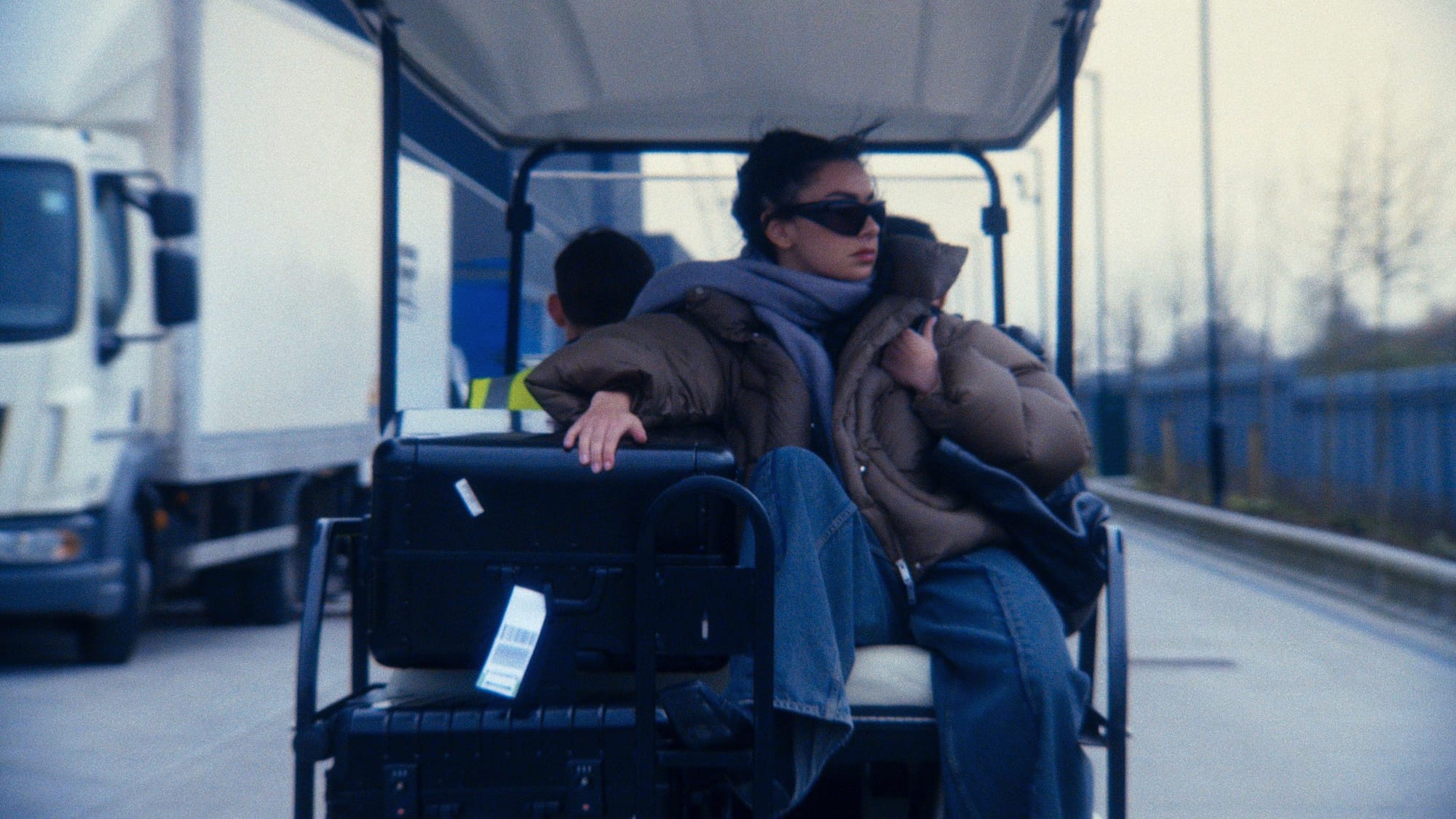
This is where The Moment takes place, after an artist has poured their blood and tears into work that serves as a personal salve on the soul, that reconciles how they've been feeling with their desired form of expression. After Charli spent nights doing boiler room DJ sets, where a dedicated audience would experience the room-flooding noise and earth-shaking bass that defined the personal odyssey contained within Brat. After productions that both document and express the burying of the past and healing of wounds caused by a misogynistic industry and the vitriolic discourse of the internet. The Moment, like every action taken to capitalize on the success of Brat, is never about the music. It's all presented with an intentionally vague, fuzzy perspective, framed as "none of it happened but maybe some of it did," and writer/director Aidan Zamiri understands just where to draw the lines of satire, and the moments between each choice of escalating absurdity paint a painfully clear picture of the system modern artists submit to when trying to get their music to an audience.
There's a level on which The Moment likely functions purely as a Spinal Tap style mockumentary and outside context becomes unnecessary, but for better or worse, this is a film that exists for those who understand Brat and Charli's aggressive individuality. It makes it all feel that much more suffocating and claustrophobic when the film leans into the corporate vampirism launching itself full scale to capitalize on the viral success of Brat summer, where after the film's earliest sequence, a strobe and sweat filled dance sequence set to Charli's "365," the music seems to disappear into the ether. The music is far less relevant than the fact that Brat summer has the potential to become an engine of perpetual profit, that it must be beaten into the ground and leverage every avenue of branding or corporate partnership imaginable in order to leech more pennies from rabid fans. Every conversation is held in a sterile conference room where everyone except the artist discusses how best to capitalize on the feverish sensation. Art and artist are now irrelevant.
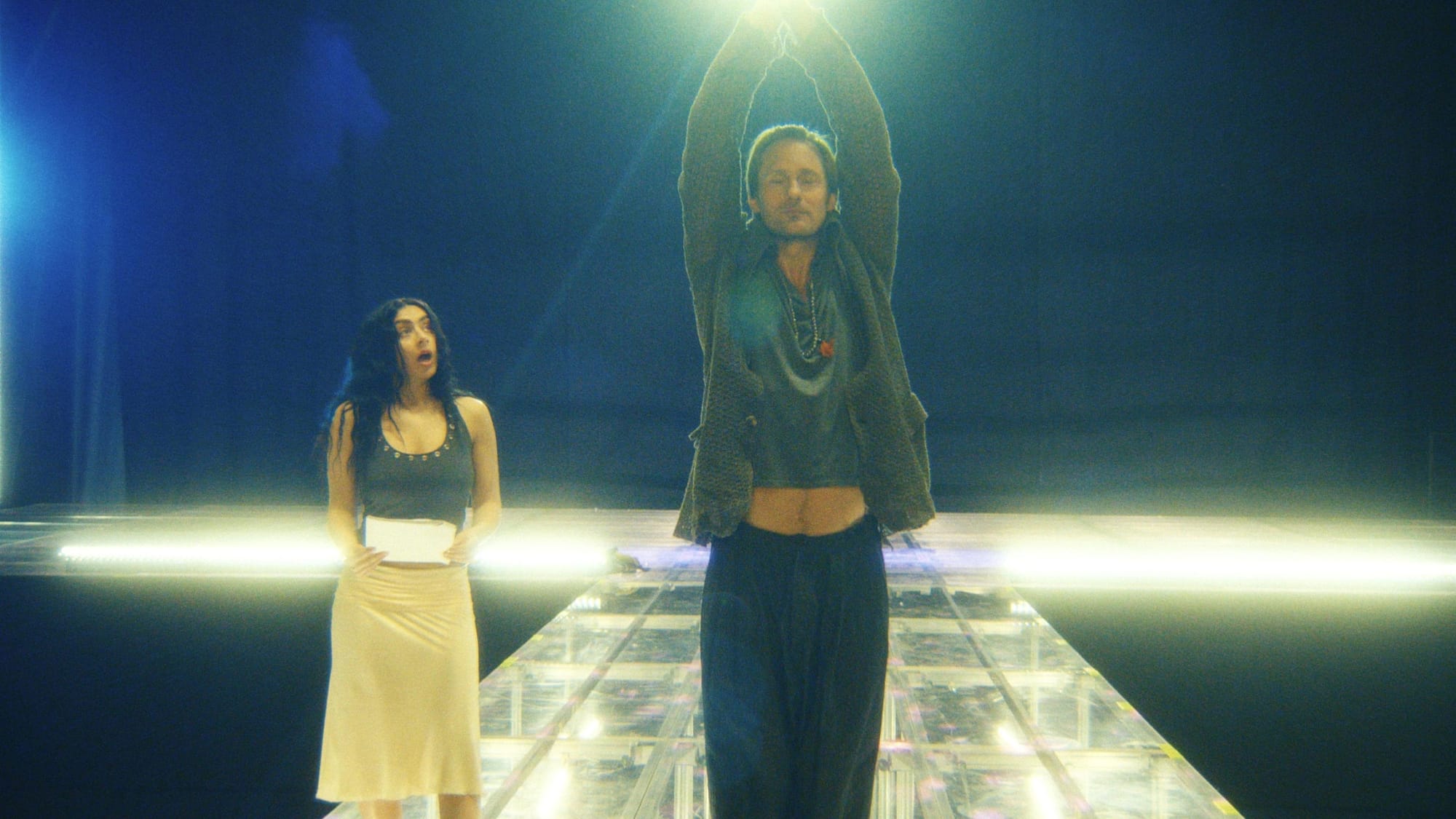
The central narrative thrust is that the label has determined the necessary course for action in continuing the staying power of Brat as a brand is to make a concert film, hiring brand friendly personality void Johannes (Alexander Skarsgård) to sand off all the rougher edges of Charli's tour design to make it all more broadly appealing. What begins as genuine creative process between Charli and creative director Celeste (Hailey Benton Gates) is quickly steamrolled by an aggressive and overwhelming amount of suggested direction from Johannes, backed by the label, becoming the fulcrum of Charli's swing towards mutually assured destruction.
Charli knows better than to present this all as pure absolution for artists as they are mined for profit, digging into the cynical veneer of celebrity and how its nature slowly insulates people from the world around them. With a Safdie level of anxiety present in the film's nonstop atmosphere bolstered by A.G. Cook's dissonant synth score, it's obvious how this kind of lifestyle is simply unsustainable, but there's never any kind of respite from the constant reminders of the impossible life she has to lead. Abandoning her team on a last minute all expenses paid trip to a luxurious Ibiza spa, even relaxation becomes a source of further pressure to maintain the facade of perfect appearance, and the people that surround are either vapidly consumed by their own celebrity or too dense to see through the PR persona. The pressure to maintain the success you've curated begets little more than further pressure, an endless stream of needing to keep up appearances to avoid being seen as failing to deliver.
It all turns you into an awful person almost by design, where the atmosphere asks you to do so much and say yes to everything without thinking, and the inevitable mistake born out of this endless stream feels like the brink of complete collapse, as if a single flippant decision could end the world as we know it. And so the only sensible course of action is to take it all down, to give in to the corporate demand for sterility that shaves off every artistic and stylistic choice until you no longer exist and the final product is a piece of complete self-immolation. You poured your life into something and now it has lived beyond you, turned you into someone you no longer recognize, been stolen from you to enrich the circling vultures. Burn it all to the ground with a garish jumbo chartreuse lighter sponsored by Amazon. Of course we want to keep it going, to never have to face the reality of starting over, to keep feeding the machine that offers undying devotion in return for your soul, but eventually the party ends and it's time to go home.
Until I get home, I am not anyone / I have no idea where I'm going / Here I come - Geese, "Long Island City Here I Come"
Comments ()