
Wuthering Heights: All Is Lost And I Am Left To Rot
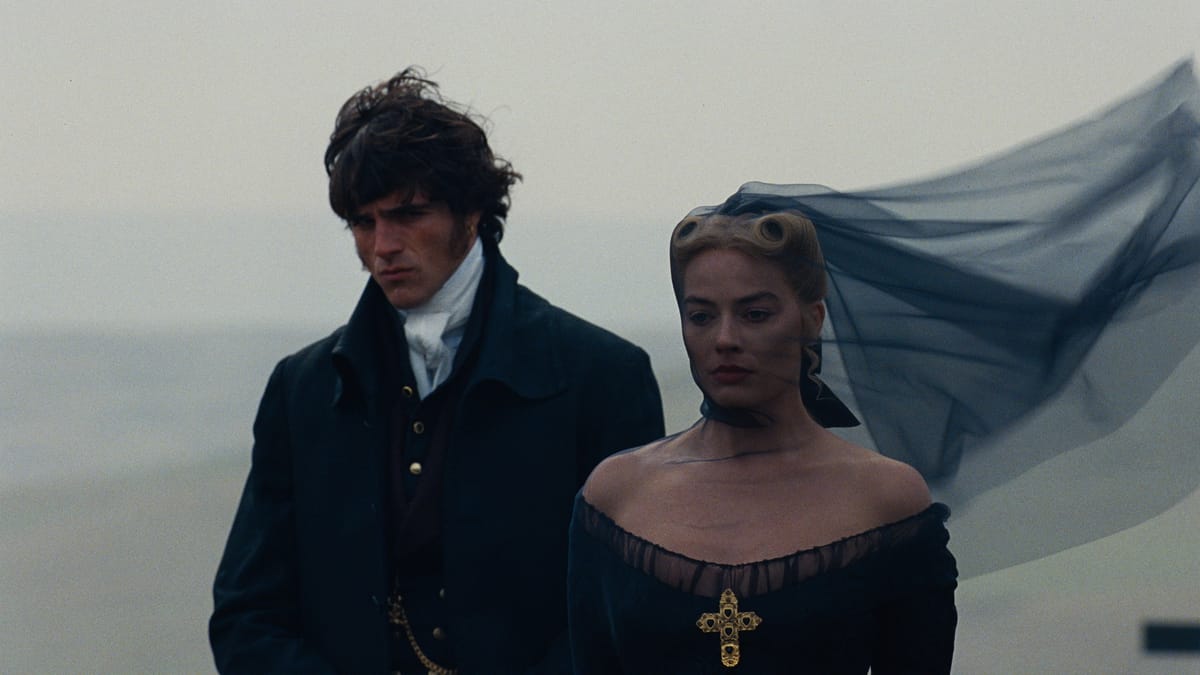
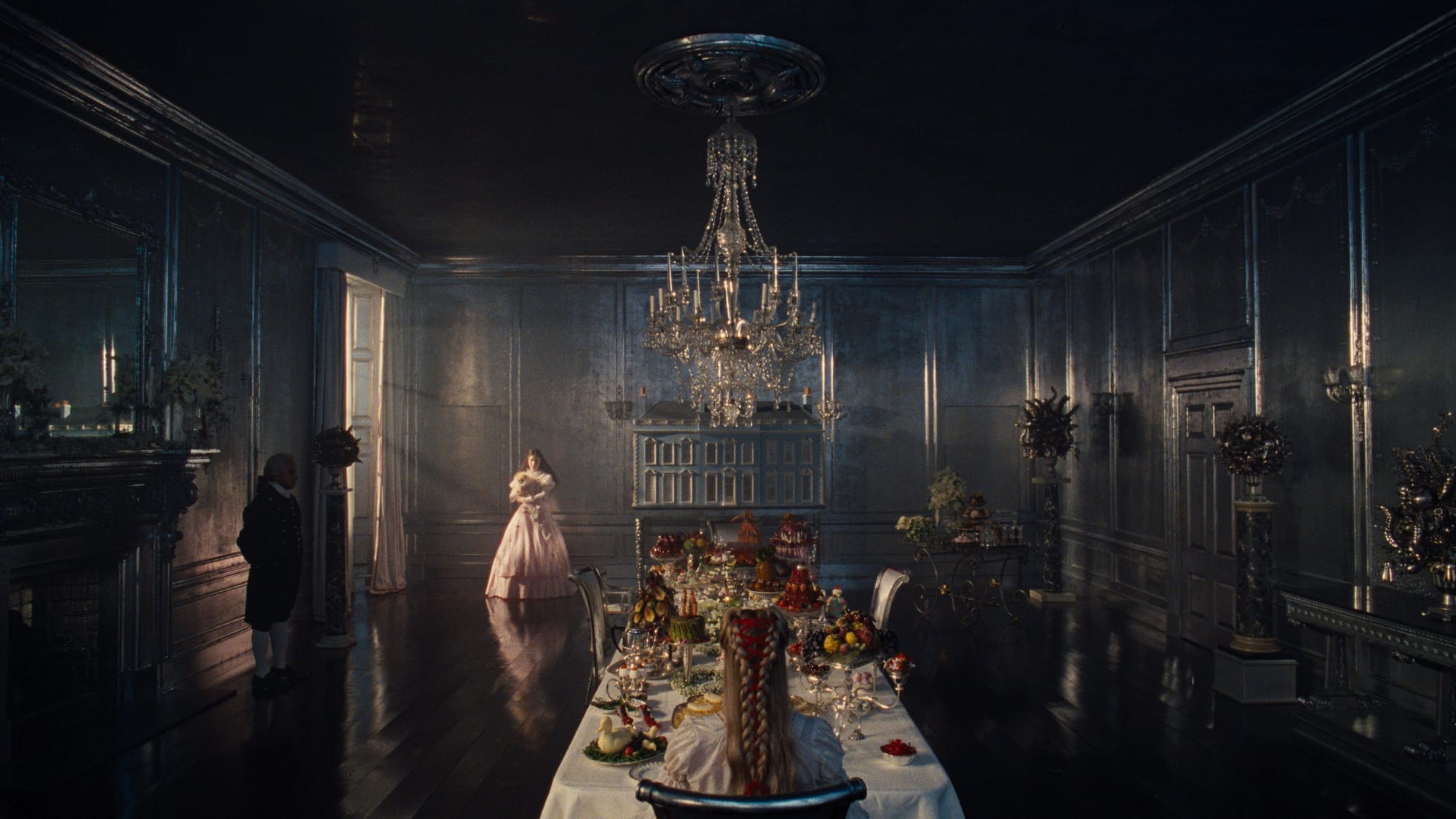
Regression of form. A real death knell for the direction of cinema as a medium in its insistence on prioritizing aesthetics above any form of emotional resonance or tangible eroticism. Certainly the nadir of a style that's been bludgeoned into existence by cinesthetic-posting that eschews all context from any given shot and focuses purely on still images from a medium of motion, this film is entirely constructed out of "one perfect shot" framing that masquerades as beautiful while providing no sense of place or emotional weight to anything the camera is doing. Ostensibly the maximalist gothic fantasy of it all alongside its anachronistic score is intended to create a sense of heightened unreality, placing its movements within a sort of demented psychosexual fairy tale, and yet instead it just feels completely haphazard and pointless.
There is no intent to any of it, mood board cinema that plucks everything out of a curated feed of aesthetic simulacra with total disregard for how any of it fits together. To be reductive, it certainly has the feeling of being designed to appeal to the kind of person who likes the idea of being into classical literature without having to engage with it, which only compounds its surface level gloss - having to dig into any of the thematic conceptualization that might be of import here would remove its ability to feign eroticism. What could conceivably be its only redeemable quality is also largely sanitized out of a desire to be palatable, tantalizing sexuality for an audience uninterested in sex on screen. So even the layer of sleazy commitment that could cover for its vapid core becomes vacuous provocation obfuscated by meaningless fetishization.
Even absent any context of the novel, an attempt to appreciate this for what it is would be a fruitless venture, as however this interpolates the original literature has completely sucked the life out of it. It's clear at many points that any of the thematic exploration of the source material has been vigorously scrubbed away, particularly in its characterization of Heathcliff, who is provided little to no arc outside of what is stated about him by others. It seems so uninterested in the dour, windswept aesthetic of Wuthering Heights itself that it rushes to bask in the lavish extravagance of the Grange, skipping any worthy establishment of the sexual relationship between Cathy and Heathcliff that would necessitate the doomed, tortured romantic tension throughout. As further evidence towards this film's entry into a canon of the death of cinema, the narrative aspirations of this film are very much in the Netflix mode of passive viewing, where everything is deliberately and directly explained instead of being conveyed through action or performance.
Nothing is entrusted to the viewer in a way that makes it impossible to be invested, though perhaps that is intentional design – by refusing to allow you to engage with the text in any meaningful way, you are forced to focus on the foreground, to either accept that you're doing nothing more than viewing softcore, aestheticized kink, or reject its pathetic attempt. Either way, it feels like the film is winning, further eroding our collective confidence in cinema as an art form while normalizing this particular brand of slop. Even when there are opportunities to interrogate the ways that kink can become abusive or cruel, even through a modern lens as opposed to a traditional one – the film would rather make the point that the cruelty is consensual, so as to remain in a mode of titillating provocation without ever making the viewer uncomfortable. So a dynamic is created where nothing adds up or builds any sort of cohesive arc, Heathcliff's cruelty becomes another kink for the audience to lap up instead of forming a fleshed out character motivated by virulent revenge.
All this to say nothing of Cathy, who manages to have even less depth than Heathcliff, a passive and puerile woman who weeps her way through every decision, if nothing else a convenient self-insert for a viewer who also wants all of the sexual taboo of a doomed romance without any of the volatile anguish that might go along with it. She may be frustrated by the supposed challenges of her conflicted turmoil between the two men she's involved with, but at no point does she face tangible consequence as a result of her actions, which is exactly the kind of cake-eating cinematic atmosphere that Fennell is wont to cultivate. This is further stunted by Robbie's casting, a woman in her mid-30s portraying an emotionally turbulent teenager makes it all hard to buy into if you're actually attempting to engage with the text of the film beyond its images, and the presented arc of a sexual awakening is rendered inert by virtue of its desire to sell marketable movie stars.
The most laughable irony here is the involvement of Charli XCX, who noted Věra Chytilová's 1966 film Daisies as an inspiration for Brat, her abrasive hyperpop fuck you to established power structures and the expectations placed on women. A film about women committing to wanton excess and greed as a rejection of both masculine power and wealth, it does come to mind as the antithesis of Wuthering Heights. Charli's work here also feels like the antithesis to Brat, losing all of the abrasive edge and sanding it down into something that sounds just out of place enough to be intentionally anachronistic without full send committing to a manic contemporary energy. That's not to say that any film presenting with lavish excess should be met by rebellious, ethereal fairy women to swing on the chandeliers and stomp all over a bountiful feast (although there are few movies that wouldn't improve with that inclusion), it's more to say that this film refuses to commit to anything that an audience might not find easily palatable, and that is what consistently lets it down.
Not only does this not engage with the class dynamics present within its insular community, it also mostly pretends that the outside world doesn't exist in a way that makes most of its decisions that much more bizarre. There is a presumption of not wanting to reject the societal expectations of marriage and class but there is no society present to apply this pressure, nor is one even implied. The end result is a dull, inert affair that can't even muster to match the shocking imagery of Fennell's Saltburn (also all surface level provocations in service of incoherent class drama, but at least its provocations feel like actual attempts to be shocking), and if it's all downhill from Saltburn we really are hearing cinema's death knell. It would be nice if a contemporary literary adaptation such as this could tackle at least its broadest thematic aims, but if we're going to take from a wealth of gothic literature just so we can interpolate it into raunchy, kink-forward provocations, the least anyone could do would be to actually commit to the sleazy atmosphere that requires rather than regress into a modern Hayes Code where everyone is horny but nothing happens.

Comments ()