
Obsession: Everywhere I Look You're All I See
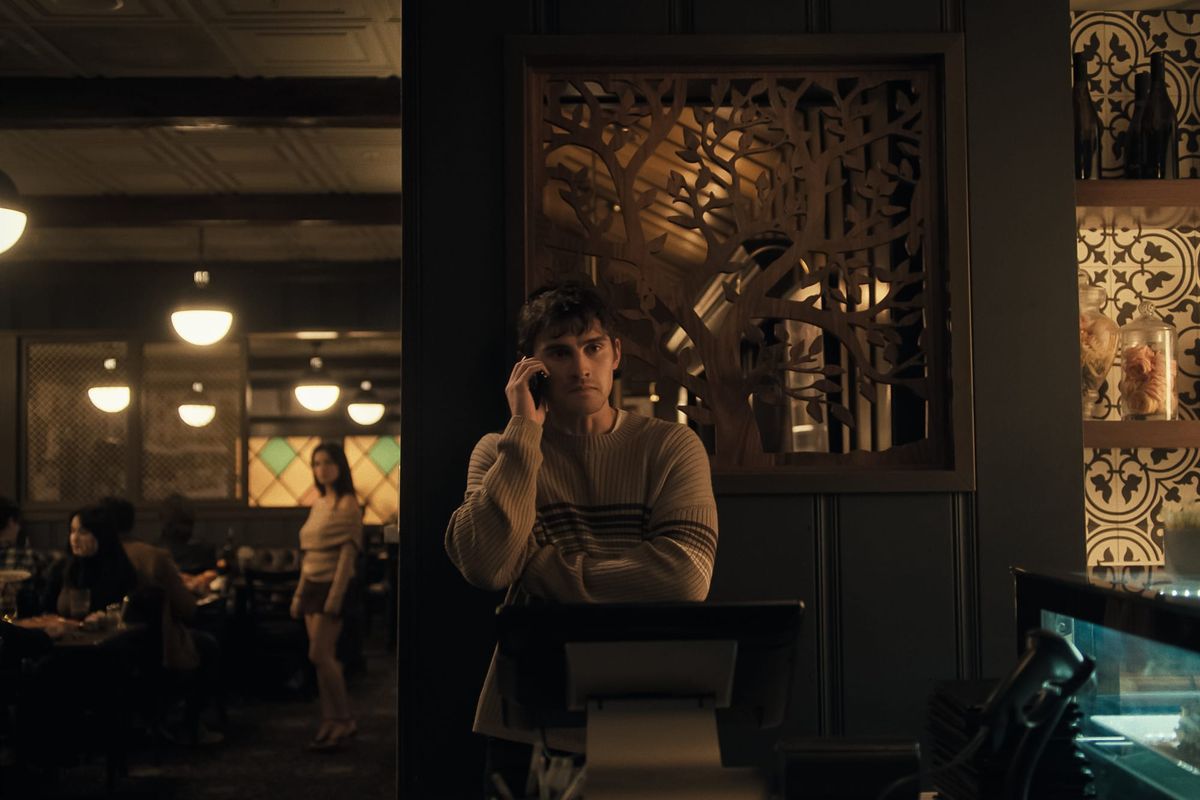
If the most frustrating trope of contemporary horror is the inclination to overexplain, Obsession is certainly pulling in the opposite direction, settling into a slippery reality where magic is real, demons exist, and incel culture is incidental. A refreshing perspective from the latest to come out of the YouTuber to filmmaker pipeline, which has been fraught with the kind of incoherent dramatization that plagues a platform driven by a faceless algorithm, this is nothing if not unceasingly bold and confidently directed. Where everything else is bogged down by details and rules, Curry Barker's demonic pixie dream girl cinema moves with a blistering propulsion freed from the chains of rationality and logic, operating on the kind of giddy throwback energy of horror classics that were more focused on the language of horror than the sticky ephemera of plot.
The effective framing of Obsession also remains in its refusal to get bogged down in the details, a logical step forward from Barker's history of sketch comedy, which doesn't have time for lengthy establishment and instead relies heavily on character and performance to express the minutia – and on that this exceeds in spades. Protagonist Bear Bailey is always pathetic, but he starts off endearingly so, the painfully familiar feeling of young unrequited love and an anxious inability to act on it. He's a frustrating character if only because the setup is so universally positioned, pining after a high school crush and letting it linger far longer than you should until its mere existence bruises your ego, all the while oblivious to the affections of anyone else. Of course, it quickly moves into sticky territory as Bear reveals more and more of who he is, and what was once sympathetically endearing becomes an entirely different kind of frustrating familiarity as he becomes more and more of a feckless loser incapable of seeing the woman he's infatuated with as anything beyond an object of his desire to be won over.
The first act of the film makes it quickly and abundantly clear that Nikki, the object of Bear's affections, is not interested in him beyond the close friendship comprised of them and fellow music store employees Ian and Sarah. It's not that Bear is in denial – at a certain point his willful refusal to so much as ask Nikki for coffee or be straight with her about his intentions means that he would rather wallow in the self-pity of being alone than accept reality and move on. His last ditch effort after one final failure to have an honest conversation with her is to put all of his faith in a cheap trinket that claims to grant wishes; the only thing easier than being rejected is to hope that the ambiguously magical properties of a gnarled stick in a box might entice her to love him more than anyone else in the world.
"Be careful what you wish for" is a premise as old as time, but it's also rare that it's done with such potent verve, to completely unambiguously launch that premise into the stratosphere without wasting any energy on more exposition than absolutely necessary. It rests almost entirely on the ability of Inde Navarrette's performance as Nikki and it's hard to recall a breakout performance in recent memory that's so wholly committed. The focus here is entirely on the rapid meltdown of both Bear and Nikki, him as he comes face to face with getting exactly what he wanted in the worst way imaginable and her as she unravels at the hand of whatever monstrous entity has consumed her mind and set her on a path of head over heels destruction.
Obsession gets a lot of things right; the tonal balance between its sinister undertones and overt violence against the bleak, dark humor works astonishingly well in both directions. Barker is able to whip the film at a smooth drift around hairpin turns in such a way that you're never able to anticipate where things will go next, every moment of levity capable of breaking into horrifying, gory violence, every moment of terror capable of spinning on a dime into riotous comedy, every uncomfortable silence poised to cut through the tension with some insidiously disconcerting imagery. As a film, as genre cinema, as part of the horror canon, it's not doing anything particularly revolutionary. It doesn't really dig into its thematic underpinnings in a meaningful way, it uses the aesthetics and ideation of the modern incel-coded pathetic man and has no interest in getting to the core of that loneliness or the way that these kinds of men fail to see the women around them as people.
It's not necessarily a failing of the film, similar recent breakout horror filmmakers like Zach Cregger wield the aesthetics of America's broken cultural landscape alongside its corroded conservative core to find the chilling horror inherent to this country without really understanding how to leverage that imagery and the result can still be a fascinating object to examine even if the result isn't a totally comprehensive thesis on its ideas. Besides, Obsession's biggest downfall isn't in its themes but in its visual language, a frustratingly muddy and washed out film whose lens doesn't hold up to its brilliant production design or art direction. Blame it on budgetary restrictions for a small film like this but what feels the most frustrating is its inability to demonstrate that a world outside of its one or two sets exists. It's a frequent failing of contemporary horror but this is so insular that it begins to buckle under its own weight by the end, even when characters go out they are confined to the interior of a car as if a space around them doesn't exist, and the abrupt violence of the film would be better served if it felt like it had more consequence on a living, breathing space.
These complaints are minor in the face of something largely refreshingly well crafted, and maybe there's a bit of a reactionary response baked in when you walk into something being heralded as the greatest thing to happen to horror in years – but it seems like it speaks even more to the fact that pop horror has fallen to a pathetically weak state of late, and the bar is low enough that something with enough foundational confidence and competence feels like its own kind of revolution. If it's what we need to break us out of the prison of overexplanation, rules, and extensive wikis that encompass the lore of every single property, maybe we can all be a little obsessed. As a treat.

Comments ()